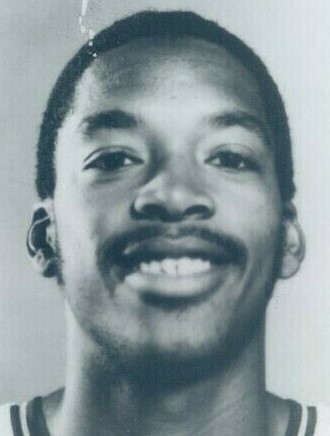
Fat Lever: Unpacking the NBA All-Star's Versatile Triple-Double Game
In the annals of NBA history, certain names evoke specific images: prolific scorers, dominant rebounders, or master distributors. Then there are players whose entire game defies easy categorization, weaving together threads of every statistical column into a tapestry of all-around excellence. Lafayette "Fat" Lever is one such player, a true virtuoso of versatility whose name, though perhaps less universally recognized than some contemporaries, stands as a testament to consistent, impactful, triple-double brilliance. Standing at a modest 6 feet 3 inches, Lever played with a relentless energy and innate basketball intelligence that allowed him to routinely outplay bigger, more athletic opponents, earning him a place among the league's elite and cementing his legacy as a Denver Nuggets legend.
The Man Behind the Nickname: Early Life and Collegiate Excellence
Born Lafayette Lever on August 18, 1960, in Pine Bluff, Arkansas, the future NBA star’s distinctive nickname has a rather endearing origin. As a child, his younger brother struggled to pronounce "Lafayette," shortening it to "Fat" – a moniker that stuck throughout his life and career. Far from an indication of physique, the nickname became synonymous with a robust, all-encompassing game.
Lever's basketball journey began in earnest at Pueblo High School in Tucson, Arizona. Here, he quickly established himself as a dominant force, leading Pueblo to an impressive back-to-back state championship run. His high school exploits were so profound that in 1988, the gymnasium was rightfully named in his honor, a rare and fitting tribute to a local hero.
His stellar high school career paved the way for a standout collegiate career at Arizona State University. From 1978 to 1982, Lever was a four-year starter for the Arizona State Sun Devils, consistently showcasing the well-rounded game that would define his professional career. He led the Sun Devils in both assists and steals every single season, a testament to his innate playmaking ability and defensive tenacity. By his senior year, he had also evolved into a primary scoring option, leading the team with a respectable 16.3 points per game average. This collegiate period was crucial in honing his unique skillset, preparing him for the rigorous demands of the NBA.
NBA Ascension: From Blazer to Nuggets Legend
Lever's undeniable talent caught the eye of NBA scouts, leading to his selection by the Portland Trail Blazers as the 11th overall pick in the first round of the 1982 NBA Draft. He began his professional journey with Portland, where he spent two seasons, demonstrating flashes of his all-around potential. In his rookie year, he averaged solid numbers of 7.8 points, 2.8 rebounds, 5.3 assists, and 1.9 steals per game, signaling his immediate impact across multiple categories.
However, it was his move to the Denver Nuggets in 1984 that truly unleashed
Fat Lever's full potential. In Denver, Lever blossomed into a bonafide NBA All-Star and one of the league's most exciting players. His tenure with the Nuggets, spanning from 1984 to 1990, represented the prime of his career. During this period, he earned two coveted NBA All-Star selections (1988, 1990), a well-deserved All-NBA Second Team honor in 1987, and an NBA All-Defensive Second Team selection in 1988. These accolades underscore his dual-threat capability, proving he was not just an offensive maestro but also a formidable presence on the defensive end. Lever's #12 jersey was deservedly retired by the Denver Nuggets on December 2, 2017, a testament to his profound impact and enduring legacy with the franchise.
After his illustrious run with the Nuggets, Lever moved to the Dallas Mavericks in 1990. He continued to contribute significantly to the team until persistent knee injuries began to impact his playing time, eventually leading to the conclusion of his remarkable 11-season NBA career in 1994.
The Triple-Double Maestro: A Versatile Skillset Unpacked
What truly set
Fat Lever apart from his peers was his astonishing ability to fill the stat sheet, particularly his knack for recording triple-doubles. With an impressive 43 career triple-doubles, he ranks 11th all-time as of the end of the 2020–21 regular season, a truly remarkable feat for a player of his height. This achievement wasn't a fluke; it was the product of a unique and restless play style built on an exceptional blend of skills and an unwavering motor.
Lever operated as an all-around lead guard, a stat-sheet-filling floor general who redefined what a point guard could achieve. Despite being 6'3" and 170 pounds, he consistently played much bigger than his size, especially on the glass. His rebounding prowess was legendary for a guard, driven by incredible instincts, toughness, and an insatiable activity level. He simply refused to let a rebound get past him, often out-muscling or out-positioning bigger players.
Offensively, he was a high-usage primary creator, adept at pushing the tempo, setting up teammates with pinpoint passes, and scoring enough to keep defenses honest. He possessed the vision to orchestrate an offense and the scoring touch to punish opponents who focused too much on his playmaking. Defensively, Lever was an elite perimeter disruptor. His quick hands, anticipation, and aggressive ball pressure created countless turnovers, turning defense into offense with remarkable consistency. His "do-everything" nature, characterized by pace, defensive aggression, and triple-double versatility, made him an invaluable asset to every team he played for. For aspiring players, Lever’s game offers a crucial lesson:
instincts, effort, and high basketball IQ can often compensate for physical limitations, allowing smaller players to impact the game in colossal ways.
Legacy and Lasting Impact
Fat Lever's place in NBA history is perhaps that of an unsung hero, a player whose consistent, all-around excellence might be underappreciated by casual fans but is deeply respected by those who witnessed his prime. He was a pioneer of the stat-stuffing guard, a prototype for today's hyper-versatile playmakers who are expected to contribute in every facet of the game. His career achievements—two All-Star selections, All-NBA Second Team, All-Defensive Second Team, and his incredible triple-double count—speak volumes about his impact.
His #12 jersey retirement by the Denver Nuggets is a powerful symbol of his lasting legacy in Colorado. He wasn't just a great player; he was a cornerstone of the Nuggets' identity during his tenure, embodying the exciting, fast-paced brand of basketball that defined the franchise in the 1980s. Lever's influence extends beyond mere statistics; he demonstrated that sheer will, basketball intelligence, and an unwavering commitment to all-court effort could elevate a player to superstar status, regardless of conventional physical advantages.
In an era where specialized roles were often the norm, Fat Lever stood out as a universal contributor, a player who could genuinely do it all. His game serves as a timeless reminder that true value lies not just in one dominant skill, but in the harmonious blending of many, elevating both individual performance and team success.
Conclusion
Lafayette "Fat" Lever remains an enduring figure in NBA lore, a testament to the power of versatility and relentless effort. From his humble beginnings in Pine Bluff to becoming an NBA All-Star and a Denver Nuggets legend, Lever carved out a unique and impactful career. His ability to routinely register triple-doubles, particularly from the guard position and at his size, speaks volumes about his basketball IQ, tenacious spirit, and all-around game. He was a true "do-everything" player whose influence on the game, though sometimes overlooked, continues to resonate through the archetype of the modern, versatile guard. Fat Lever's legacy is one of unwavering dedication to excellence, proving that a player's impact can far exceed their listed dimensions.